Advantages and Disadvantages of AC Generator
2023-06-30
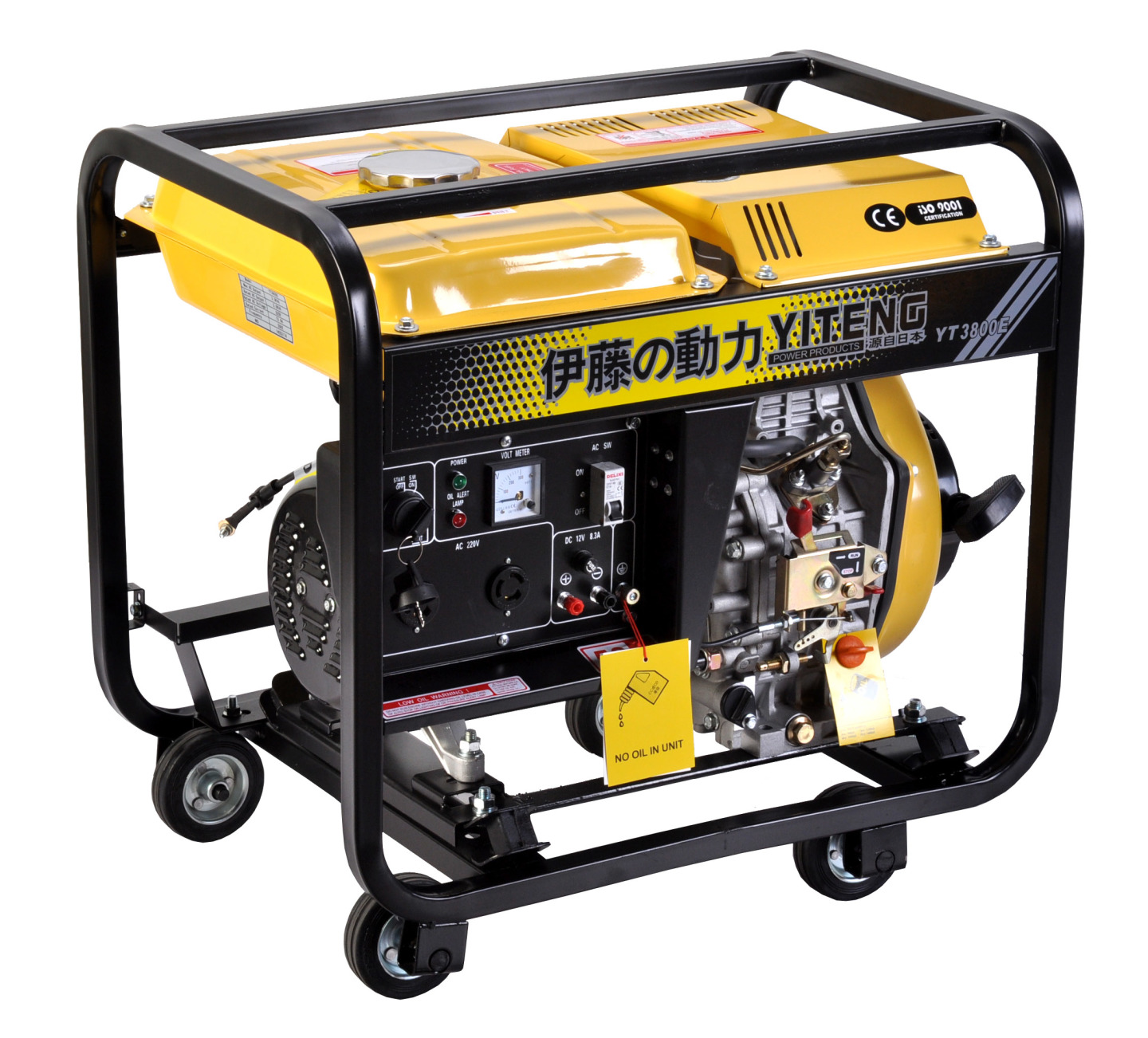
Electricity is a vital part of modern life, so when it comes to generating electricity, all units large and small rely on generators. A generator is a device that converts mechanical energy into electrical energy by producing alternating current. It can be of two types: AC generator and DC generator. An AC generator is a machine that converts mechanical energy into electrical energy to produce an electric current. Steam, water or nuclear power can drive the mechanical energy needed to generate electricity.

Working of AC Generators
The AC generator's job is to convert input mechanical energy (from any source) into alternating current or voltage. Take a quick look at the AC generator and you will see that it consists of the following parts: a slip ring conducts the current from the fixed part in the device to the rotating part.
The work of the AC generator can be understood in terms of Faraday's law of electromagnetic induction. It states that whenever a conductor crosses a line of magnetic flux, an electromotive force is generated. The rotating armature produces a continuously changing flux linkage. Therefore, the current of the galvanometer shows positive and negative values, which implies the generation of alternating current. Fleming's right hand rule states the direction of the induced current in an AC generator.

Advantages of AC Generators
The main advantages of AC generators are:
1.The design of an AC generator is more simple than a DC generator, and hence it becomes easy to understand its working principle.
2.These generators operate silently, are low maintenance devices and have the lowest cost of ownership.
3.It does not require voltage matching.
4.It is possible to convert the current from AC generators to other voltage levels using AC transformers.
5.AC motors used in AC generators are easy to maintain and smell-free, unlike DC motors, which have a significant smell.
Disadvantages of AC Generators
The main disadvantages of AC generators are:
1.It is not durable as a DC generator.
2.It requires additional insulation due to the generation of large currents.
3.It needs extra caution when working on high voltages.
Conclusion
A generator is a device that converts mechanical energy into electrical energy. An AC generator is a generator that converts mechanical energy into alternating current. The different components of the generator help to convert mechanical energy into electrical energy. It differs from a DC generator in that the current flows in one direction in a DC generator. AC generators work according to established electrical laws, such as Faraday's law of electromagnetic induction.
AC generators have their advantages as well as disadvantages. The advantages of an AC generator are that it can be stepped up or stepped down easily using transformers. It further reduces the transmission link size and reduces transmission losses. The losses in AC generators are less compared to DC generators. AC generators have a compact design. The major disadvantage of an AC generator is that it has high levels of extra insulation due to largely associated voltages. Further, these generators are susceptible to sparks and heating issues, which may lead to electric shocks and even fires. It is, therefore, important to increase the safety levels while using AC generators.
Generator Automatic Voltage Regulator FAQ
Dragon Boat Festival notice