Working Principle of Voltage Regulator
2022-09-16
Working Principle of Voltage Regulator
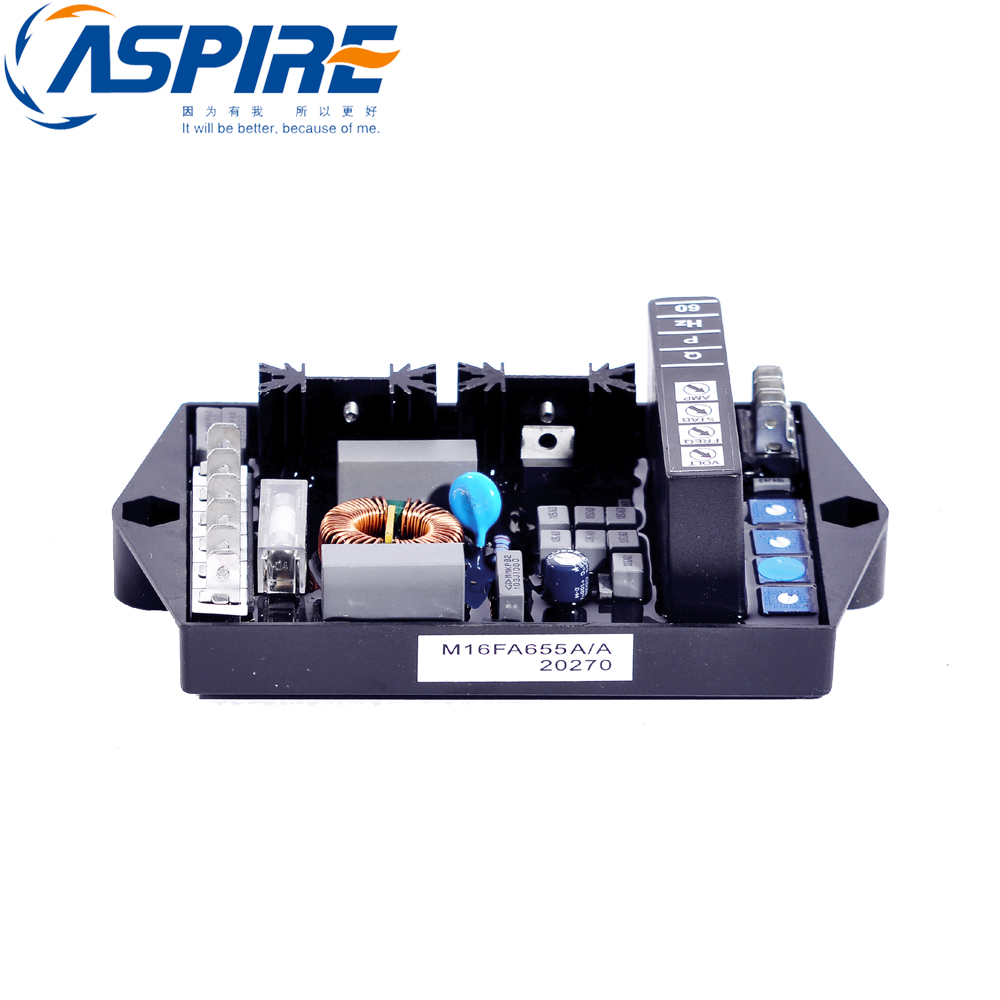
Automatic Voltage Regulator (AVR): Automatic Voltage Regulator is a sealed electronic device, through the control of the low power exciter magnetic field, regulating the rectifier output power of the exciter shaft, control of the brushless generator main magnetic field current, stable brushless generator output Voltage, And has low frequency no input signal protection device. With parallel compensation function, in line with customer expansion requirements.In a DC power SUPPLY SYSTEM, THE voltage can be controlled by an over-complex generator when the feeders are of equal length, and a feeder booster is used to keep the voltage at the end of each feeder constant when the feeders are of different lengths. In AC systems, the voltage can be controlled by various methods, such as supercharged transformers, induction regulators, shunt condensers, etc.
It works on the principle of detection of errors. The output voltage of an AC generator obtained through a potential transformer and then it is rectified, filtered and compared with a reference. The difference between the actual voltage and the reference voltage is known as the error voltage. This error voltage is amplified by an amplifier and then supplied to the main exciter or pilot exciter.
Thus, the amplified error signals control the excitation of the main or pilot exciter through a buck or a boost action (i.e. controls the fluctuation of the voltage). Exciter output control leads to the controls of the main alternator terminal voltage.
Application of the Automatic Voltage Regulator
The main functions of an AVR are as follows.
- It controls the voltage of the system and has the operation of the machine nearer to the steady state stability.
- It divides the reactive load between the alternators operating in parallel.
- The automatic voltage regulators reduce the over voltages which occur because of the sudden loss of load on the system.
- It increases the excitation of the system under fault conditions so that the maximum synchronous power exists at the time of clearance of the fault.
For getting the quick response, the quick acting voltage regulators based on the overshooting the mark principle are used. In overshoot mark principle, when the load increase the excitation of the system also increase. Before the voltage increase to the value corresponding to the increased excitation, the regulator reduces the excitation of the proper value.
Since the transmission ratio between generator and engine is fixed, the speed of generator will change with the change of engine speed. In the process of running, the engine speed changes in a wide range, and the terminal voltage of the generator will also change with the engine speed in a wide range. The output voltage of the generator must be regulated in order to keep the voltage at a certain value basically unchanged.
What is Automatic transfer Switching equipment?
How To Choose An Automatic Voltage Regulator?